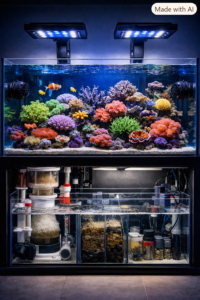
 A thriving reef aquarium depends on stability — stable lighting, stable flow, stable temperature, stable nutrients, and stable water chemistry. The equipment you choose determines how easy (or difficult) your reef journey will be. This extended guide breaks down every essential piece of reef equipment, why it matters, how it works, and how to choose the right gear for your tank size and coral goals.
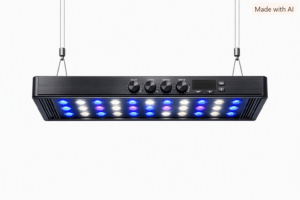 Section 2 — Reef Lighting (The Engine of Coral Growth)
Lighting is the most important piece of equipment in a reef tank. Corals rely on zooxanthellae algae for photosynthesis, which requires specific wavelengths of blue and violet light.
Why Lighting Matters
Drives coral growth
Enhances colouration
Determines coral placement
Influences algae growth
Affects coral health and metabolism
Types of Reef Lighting
LED Lighting (Modern Standard)
LEDs dominate the reef hobby due to:
Adjustable spectrum
Adjustable intensity
Low heat output
Long lifespan
Energy efficiency
Best for: Soft corals, LPS, SPS — all reef types Popular brands: Radion, AI Hydra, Kessil, Reef Factory
T5 Fluorescent Lighting
Still used in SPS‑dominant tanks due to:
Even light spread
Excellent colour blending
Proven coral growth
Often combined with LEDs in hybrid fixtures.
Metal Halide
Old‑school but powerful:
Intense PAR
Natural shimmer
Excellent SPS growth
Downsides: heat, energy usage, bulb replacement.
Choosing the Right Lighting
Soft Corals (Zoas, Mushrooms, GSP)
PAR: 50–150
Moderate LED lighting
LPS Corals (Hammer, Frogspawn, Acan)
PAR: 80–150
Moderate LED or T5
SPS Corals (Acropora, Montipora)
PAR: 200–350
High‑end LED or T5 hybrid
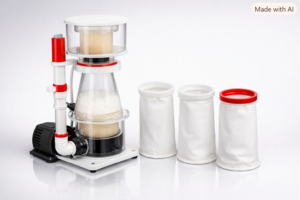 Section 3 — Filtration (The Life Support System)
Filtration keeps water clean, clear, and safe. Reef tanks use three types of filtration:
Mechanical Filtration
Removes physical debris.
Examples:
Filter socks
Filter floss
Roller mats
Mechanical filtration must be cleaned frequently to prevent nutrient spikes.
Biological Filtration
The backbone of reef stability.
Examples:
Live rock
Ceramic bio‑media
MarinePure blocks
Beneficial bacteria convert toxic ammonia → nitrite → nitrate.
Chemical Filtration
Removes dissolved impurities.
Examples:
Activated carbon
GFO (phosphate remover)
Purigen
Chemical filtration improves clarity and controls algae.
Protein Skimmer (Essential for Most Reef Tanks)
A protein skimmer removes organic waste before it breaks down.
Why Skimmers Matter
Reduce nutrients
Improve water clarity
Oxygenate water
Stabilise pH
Skimmers are essential for tanks 150+ litres and recommended for all reef systems.
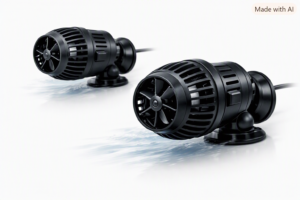 Section 4 — Water Movement (Flow Is Life)
Corals rely on water movement for:
Gas exchange
Nutrient delivery
Waste removal
Preventing dead spots
Types of Flow Equipment
Powerheads
Create directional flow.
Wave Makers
Create alternating, natural wave patterns.
Gyre Pumps
Move water in a horizontal sheet across the tank.
Flow Requirements by Coral Type
Soft Corals
Low to moderate flow.
LPS Corals
Low to moderate flow — too much can damage fleshy polyps.
SPS Corals
High flow — essential for nutrient exchange.
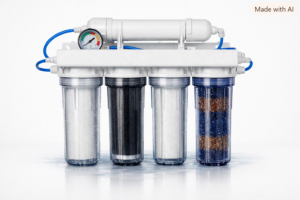 Section 5 — RO/DI Water Purification (The Foundation of Stability)
Tap water contains impurities that cause algae, coral decline, and instability. An RO/DI system removes:
Chlorine
Chloramines
Silicates
Heavy metals
Nitrates
Phosphates
RO/DI water is used for:
Mixing saltwater
Top‑off water
Reducing algae
This is one of the most important investments for long‑term reef success.
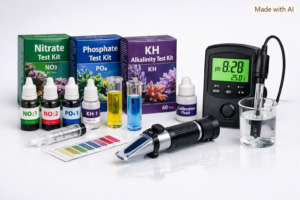 Section 7 — Testing & Monitoring (Your Reef’s Dashboard)
Testing ensures your reef stays stable and healthy.
Essential Test Kits
Water Chemistry
Ammonia
Nitrite
Nitrate
Phosphate
Reef Minerals
Calcium
Alkalinity
Magnesium
Other Tools
Refractometer (salinity)
Digital thermometer
pH monitor
Automated Monitoring Systems
Advanced reefers use:
Reef Factory
Neptune Apex
GHL Profilux
These systems monitor:
pH
Temperature
Salinity
ORP
Flow
Lighting
They can automate dosing, feeding, and alerts.
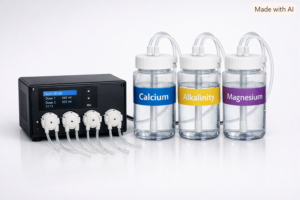 Section 8 — Dosing Equipment (For Growing Corals)
As corals grow, they consume minerals. Dosing pumps automate the addition of:
Calcium
Alkalinity
Magnesium
Trace elements
Soft coral tanks may not need dosing, but LPS and SPS tanks do
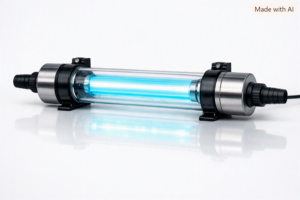 Section 9 — UV Steriliser (Optional but Helpful)
UV sterilisation helps control:
Algae blooms
Bacterial infections
Parasites
It improves water clarity and reduces disease risk.