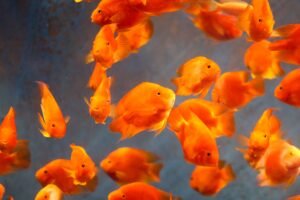
 Freshwater aquariums are easier to maintain than saltwater systems, more affordable, and offer thousands of fish, plant, and aquascaping options.
They teach:
- Water chemistry
- Animal Care
- Aquascaping
- Biological filtration
- Long‑term maintenance
Beginners succeed when they follow a structured setup process — and this guide provides exactly that.
 2. Choosing Your First Aquarium
The tank you choose determines how easy your first experience will be.
✔ Best beginner tank sizes
- 80–120L — ideal beginner size
- 150–200L — extremely stable, great for communities
✔ Avoid
- Tanks under 40L (unstable)
- Tall portrait tanks (poor surface area)
- Bowls (unethical, unstable)
Why bigger is better
- More stable water chemistry
- More stocking options
- Less risk of ammonia spikes
- Easier maintenance
3. Essential Equipment for Beginners
Beginners should use simple, reliable equipment.
 Filtration – Your filter is the heart of the aquarium.
Types of beginner‑friendly filters:
- Sponge filter — nano tanks
- Hang‑on‑back filter — 60–150L tanks
- Canister filter — 150L+ tanks
🌡 Heating – Most tropical fish need 24–26°C.
- Use an adjustable heater
- Place near filter output for even heat
 Lighting – LED lighting is best.
- 6–8 hours per day
- Stronger lighting for planted tanks
 Substrate – Choose based on fish and plants:
- Sand — Corydoras, loaches
- Fine gravel — general use
- Plant soil — aquascapes
 Water conditioner – Removes chlorine and chloramine.
Test kit – Tests for ammonia, nitrite, nitrate, pH, GH, KH.
4. Choosing a Location for Your Aquarium
Placement affects stability and maintenance.
✔ Best locations
- Away from direct sunlight
- Away from radiators
- On a sturdy, level stand
- Near power sockets
- Easy access for water changes
 Avoid
- Windows
- Kitchens
- High‑traffic areas
- Unstable furniture
5. Setting Up the Aquarium (Step‑by‑Step)
Step 1 — Rinse the tank
Use water only — no soap.
Step 2 — Add substrate
- Rinse sand or gravel
- Add 3–5 cm depth
- Slope substrate for aquascaping
Step 3 — Add hardscape
- Driftwood
- Rocks
- Caves
- Ensure stability
Step 4 — Add plants
- Root plants into substrate
- Add floating plants
- Mist plants while aquascaping
Step 5 — Fill the tank
- Add dechlorinated water
- Fill slowly to avoid disturbing substrate
Step 6 — Start equipment
- Turn on filter
- Turn on heater
- Set temperature to 24–26°C
6. The Nitrogen Cycle (Critical for Beginners)
The nitrogen cycle is the most important concept in fishkeeping.
What is cycling?
Cycling establishes beneficial bacteria that convert toxic ammonia into nitrite, then nitrate.
Stages
- Ammonia spike
- Nitrite spike
- Nitrate appears
- Cycle complete
How long it takes
2–6 weeks depending on method.
Cycling Methods
- Fishless cycling (recommended)
- Using bottled bacteria
- Using seeded media
Beginners should read the full guide: Nitrogen Cycle Guide
7. Choosing Beginner‑Friendly Fish
✔ Best beginner fish
- Guppies
- Platies
- Mollies
- Corydoras
- Tetras
- Rasboras
- Dwarf gouramis
- Bristlenose pleco
Avoid for beginners
- Discus
- African cichlids
- Large Central American cichlids
- Goldfish (require huge tanks)
- Fast barbs
- Predatory fish
Full guide: Beginner Fish Guide
8. Stocking Your First Aquarium
General stocking rule – 1 cm of fish per litre (approximate, not perfect)
Stock slowly – Add fish in small groups over several weeks.
Quarantine new fish – Prevents disease introduction.
Full guide: Fish Quarantine Guide
9. Beginner Aquascaping
Aquascaping is optional — but it dramatically improves fish health and tank stability.
Aquascaping styles
- Nature style
- Jungle style
- Iwagumi
- Dutch style
- Blackwater
Hardscape
- Driftwood
- Rocks
- Branches
Plants
- Amazon Swords
- Cryptocoryne
- Vallisneria
- Java Fern
- Anubias
- Floating plants
Full guide: Freshwater Aquascaping Guide
10. First 30 Days — Beginner Timeline
Week 1
- Cloudy water
- Cycling begins
- Test daily
Week 2
- Nitrite spike
- Water changes as needed
Week 3
- Nitrate appears
- Add first fish
Week 4
- Tank stabilises
- Add more fish
11. Beginner Maintenance Routine
Weekly
- 25–40% water change
- Clean glass
- Test water
- Trim plants
Monthly
- Rinse filter media
- Deep clean hardscape
Every 6 months
- Replace worn plants
- Review stocking
Full guide: Aquarium Maintenance Guide
12. Common Beginner Mistakes
- Adding fish before cycling
- Overfeeding
- Overstocking
- Using gravel with Corydoras
- Strong flow for gouramis
- Mixing incompatible fish
- Not testing water
- Cleaning filter media under tap water
13. Summary
A successful beginner aquarium requires planning, patience, and proper equipment. By choosing the right tank, cycling it correctly, stocking responsibly, and maintaining stable water chemistry, beginners can create a thriving ecosystem full of healthy fish and lush plants.
This guide integrates seamlessly with your setup guide, water chemistry pages, aquascaping guides, and species profiles.